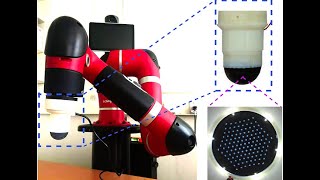
Overview to Combining Physics Based Simulation And Machine Learning For Eit Based Tactile Sensing
Looking for the latest information on Combining Physics Based Simulation And Machine Learning For Eit Based Tactile Sensing? We've researched comprehensive data, records, and insights about Combining Physics Based Simulation And Machine Learning For Eit Based Tactile Sensing.
Key Details
Explore the main sources for Combining Physics Based Simulation And Machine Learning For Eit Based Tactile Sensing.
Latest News
Stay updated on Combining Physics Based Simulation And Machine Learning For Eit Based Tactile Sensing's latest milestones.
AI/ML+Physics Part 1: Choosing what to model [Physics Informed Machine Learning]
Sim-to-Real Transfer for Optical Tactile Sensing
MuxGel: Simultaneous Dual-Modal Visuo-Tactile Sensing via Spatially Multiplexing & Deep Reconstructi
Combining existing sensors with machine learning improves robots' intrinsic sense of touch
Sim-to-Real for Robotic Tactile Sensing via Physics-Based Sim & Learned Latent Projections (Full)
Physics Meets AI - Geometric Deep Learning with Altair's PhysicsAI
Interpreting and Predicting Tactile Signals via a Physics-Based and Data-Driven Framework (Teaser)
Machine Learning EIT
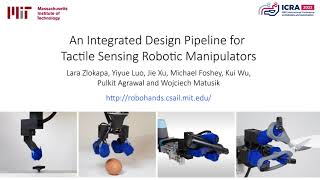
Integrated Design Pipeline For Tactile Sensing Robotic Manipulators
Making Robots Smarter II: Extended Tactile Sensing
The Missing Sense in Robotics: Tactile Intelligence for Physical AI| GelSight CEO Youssef Benmokhtar
Full Guide
Data is compiled from public records and verified media reports.
Last Updated: August 16, 2026
Future Outlook
For 2026, Combining Physics Based Simulation And Machine Learning For Eit Based Tactile Sensing remains one of the most talked-about information profiles. Check back for the latest updates.
Disclaimer: Disclaimer: All information is compiled from publicly available data, media reports, and analysis. Actual details may vary.


![AI/ML+Physics Part 1: Choosing what to model [Physics Informed Machine Learning]](https://i.ytimg.com/vi/ARMk955pGbg/mqdefault.jpg)