Background of Oopsla Probability Type Inference For Flexible Approximate Programming
Looking for the latest information on Oopsla Probability Type Inference For Flexible Approximate Programming? We've gathered comprehensive data, records, and insights about Oopsla Probability Type Inference For Flexible Approximate Programming.
Main Features
Explore the key sources for Oopsla Probability Type Inference For Flexible Approximate Programming.
History
Stay updated on Oopsla Probability Type Inference For Flexible Approximate Programming's latest milestones.
[OOPSLA] Approximate Computation with Outlier Detection in Topaz
[OOPSLA'25] Structural Information Flow: A Fresh Look at Types for Non-Interference
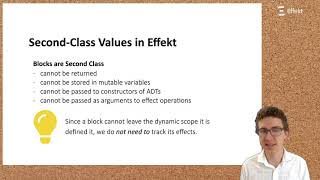
Effects as Capabilities: Effect Handlers and Lightweight Effect Polymorphism (OOPSLA'20)
[PLDI'26] GradInf: Gradient Estimation as Probabilistic Inference
[PLDI'26] [SIGPLAN OOPSLA’25] Active Learning for Neurosymbolic Program Synthesis
[POPL'26] Local Contextual Type Inference
[ProLaLa24] The Future of ProLaLa
[OOPSLA] Synthesis of Layout Engines from Relational Constraints
Fritz Obermeyer - Probabilistic Programming and Readable Models | PyData Yerevan 2022
Uncovering the Unknown: Principles of Type Inference
Deep Dive
Data is compiled from public records and verified media reports.
Last Updated: August 14, 2026
Future Outlook
For 2026, Oopsla Probability Type Inference For Flexible Approximate Programming remains one of the most searched-for information profiles. Check back for the latest updates.
Disclaimer: Disclaimer: All information is compiled from publicly available data, media reports, and analysis. Actual details may vary.
![Information [OOPSLA] Probability Type Inference for Flexible Approximate Programming Guide](https://i.ytimg.com/vi/XKlEu5RTnuI/mqdefault.jpg)
![[PLDI'26] [SIGPLAN OOPSLA’25] Probabilistic Inference for Datalog with Correlated Inputs Update](https://i.ytimg.com/vi/00UOatrrKzw/mqdefault.jpg)
![[OOPSLA24] Type Inference Logics Update](https://i.ytimg.com/vi/t_jnXtr20e4/mqdefault.jpg)
![[OOPSLA] Approximate Computation with Outlier Detection in Topaz](https://i.ytimg.com/vi/eF54rRlQP-c/mqdefault.jpg)
![[OOPSLA'25] Structural Information Flow: A Fresh Look at Types for Non-Interference](https://i.ytimg.com/vi/60gftf-nUEM/mqdefault.jpg)
![[ICFP/SPLASH'25] Orchid Plenary Ballroom - SPLASH OOPSLA (Oct 17th)](https://i.ytimg.com/vi/zoE2w2hueYQ/mqdefault.jpg)
![[PLDI'26] GradInf: Gradient Estimation as Probabilistic Inference](https://i.ytimg.com/vi/8KM0u0Hu6bc/mqdefault.jpg)
![[PLDI'26] [SIGPLAN OOPSLA’25] Active Learning for Neurosymbolic Program Synthesis](https://i.ytimg.com/vi/f8DyasOJidQ/mqdefault.jpg)
![[POPL'26] Local Contextual Type Inference](https://i.ytimg.com/vi/FHEIC7FblzE/mqdefault.jpg)
![[ProLaLa24] The Future of ProLaLa](https://i.ytimg.com/vi/gponGrEcAmU/mqdefault.jpg)
![[OOPSLA] Synthesis of Layout Engines from Relational Constraints](https://i.ytimg.com/vi/ehFHpo2YiPo/mqdefault.jpg)


![Information [OOPSLA] How Scale Affects Structure in Java Programs News](https://i.ytimg.com/vi/zj-BnP_k-YI/mqdefault.jpg)
